
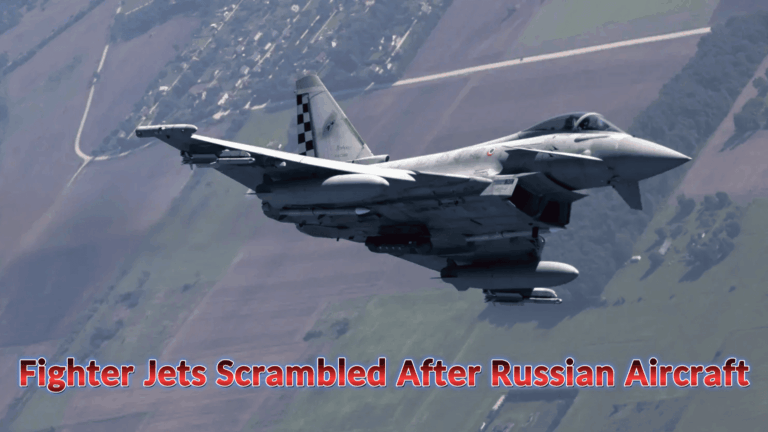
High Alert Over the Baltic
On the morning of September 28, 2025, alarms blared through NATO’s Combined Air Operations Centre in Uedem, Germany. An unidentified aircraft had breached radar shadows over the Baltic Sea flying low, cold, and silent. The mystery aircraft approached NATO airspace without a transponder, ignoring civilian flight protocols.
Almost instantly, Quick Reaction Alert teams were activated.
Jets in the Air Within Minutes
In response, Polish F-16s launched from Krzesiny Air Base, followed by German Eurofighter Typhoons. Moments later, U.S. F-35s lifted off from Lithuania, forming a multi-national intercept squadron.
This seamless coordination illustrated NATO’s readiness. Yet, behind the calm voices on encrypted comms, tensions rose sharply.
A Russian Surveillance Jet Identified
Soon after intercept, the aircraft was identified as a Russian Tu-214R a high-tech reconnaissance platform capable of electronic warfare and long-range surveillance. Critically, it had crossed into Lithuanian sovereign airspace for nearly 45 seconds.
Although the breach was brief, it was deliberate.
“This was not a navigational error. It was a calculated incursion,” said a senior NATO official.
Shadowed and Challenged
The NATO fighters executed standard intercept procedures: lock-on, formation box-in, and radio challenge. The Russian aircraft initially ignored all hails. It finally turned eastward, trailing countermeasures a subtle but unmistakable act of defiance.
The Tu-214R retreated toward Kaliningrad, shadowed by NATO jets until it left the zone.
Diplomatic Tensions Escalate
Just hours later, NATO convened an emergency meeting in Brussels. Meanwhile, Moscow claimed innocence, stating the aircraft was on a “routine training flight.” NATO leaders rejected the explanation outright.
“You don’t ‘accidentally’ fly an ELINT aircraft that close to NATO airspace, without a transponder, and at low altitude,” remarked Brigadier General Anke Richter.
Pattern of Provocation
This incident marks the fourth aerial confrontation in just two weeks. Combined with cyberattacks and large-scale military exercises near the border, NATO officials fear these moves are part of a broader hybrid threat.
Notably, the Suwałki Gap a vulnerable 65 km stretch between Poland and Lithuania has seen increasing Russian surveillance activity.
An Ominous Warning
Experts believe these provocations are testing NATO’s readiness and response times.
“This is modern warfare without shots fired,” said defense analyst Colonel James Herrick. “It’s psychological pressure — meant to probe our thresholds.”
Conclusion: A Calm Before the Storm?
For now, the airspace has returned to silence. However, the message is clear: NATO is being tested, and the margin for error is shrinking.
The next breach may not be so easily resolved.










Vintage Items


Fan Collectibles
Christian Laflamme Autographed 1995 Hockey Card Chicago Blackhawks


Fan Collectibles
Carlton Fisk Autographed 1998 UD Retro Sign of the Times Card
